
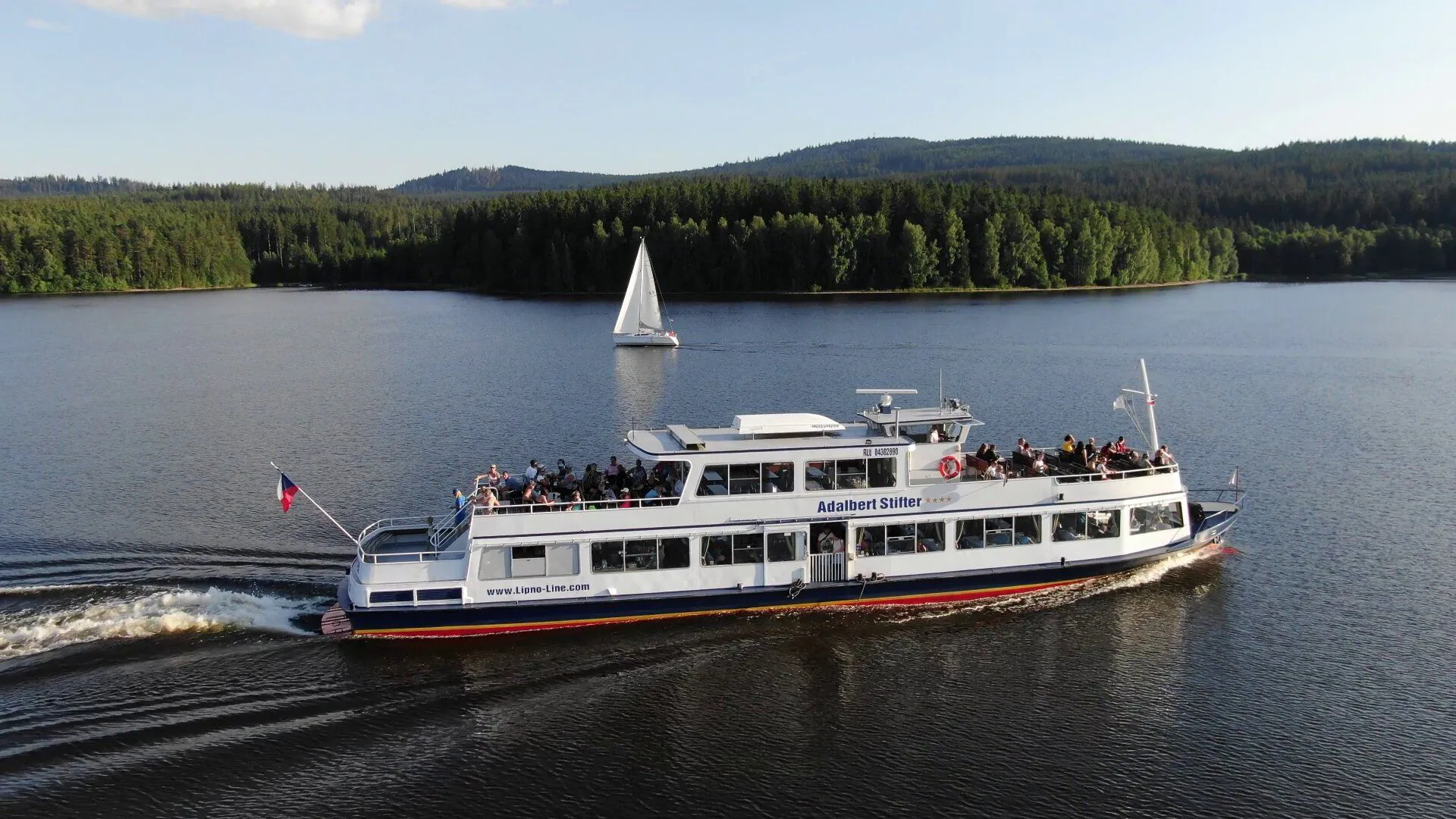
Discover Lipno
Places, ships and their stories
What can you see along the shore? How did the Adalbert Stifter reach Lake Lipno? Discover the places, ships and stories around the lake in short films or at your own reading pace during your cruise.
Places by the lake
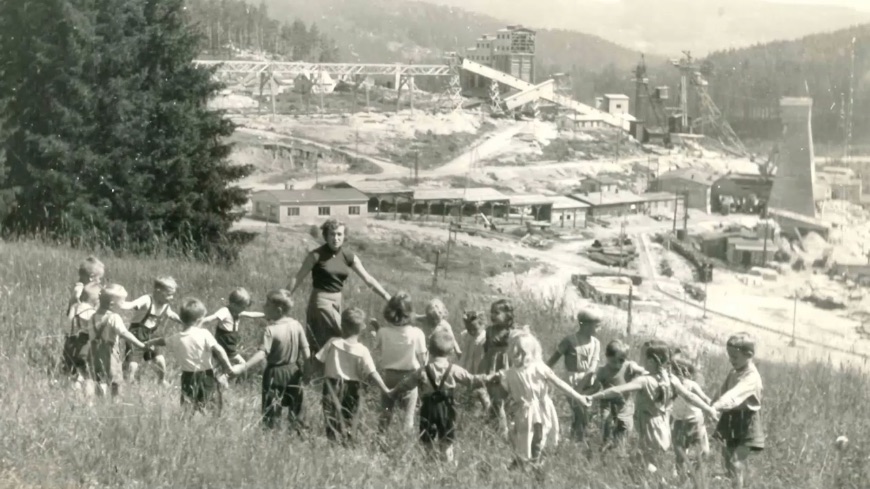
Lipno nad Vltavou – from village to holiday destination
The reservoir transformed Lipno. Discover the story of the village and the changing landscape along its shores.
Read the story
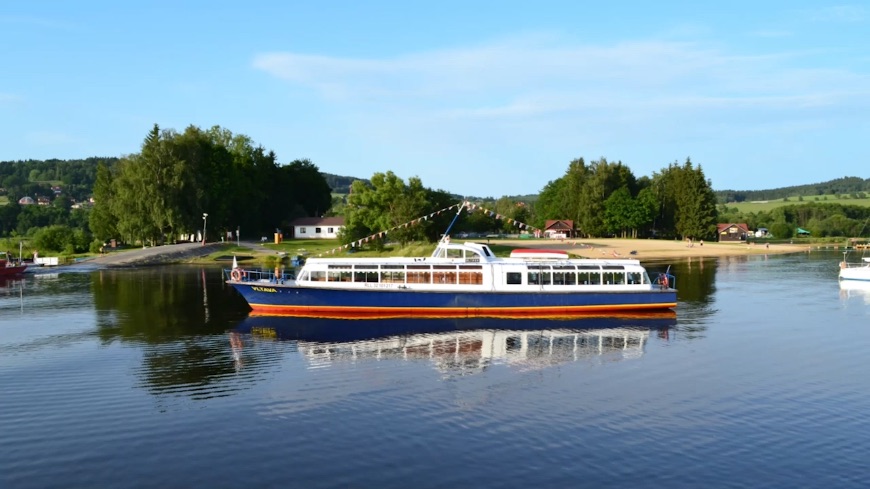
Where boats now lie in the harbour and visitors stroll along the waterfront, a small village once stood beside the Vltava River. Timber rafting connected this wooded region with communities downstream. Wood and water shaped daily life long before the arrival of modern tourism.
Work on the Lipno reservoir began in the early 1950s. For people living beside the river, it brought profound change: old houses and familiar paths gave way, and new housing was built. From 1958, the rising water permanently changed the landscape. The river valley became a broad expanse of water.
Lipno nad Vltavou later developed into a holiday destination with a harbour, accommodation and leisure activities. From the ship, it is easy to imagine this transformation as your view moves from the lively waterfront to the wooded hills. Our trip ideas offer inspiration for exploring on land.
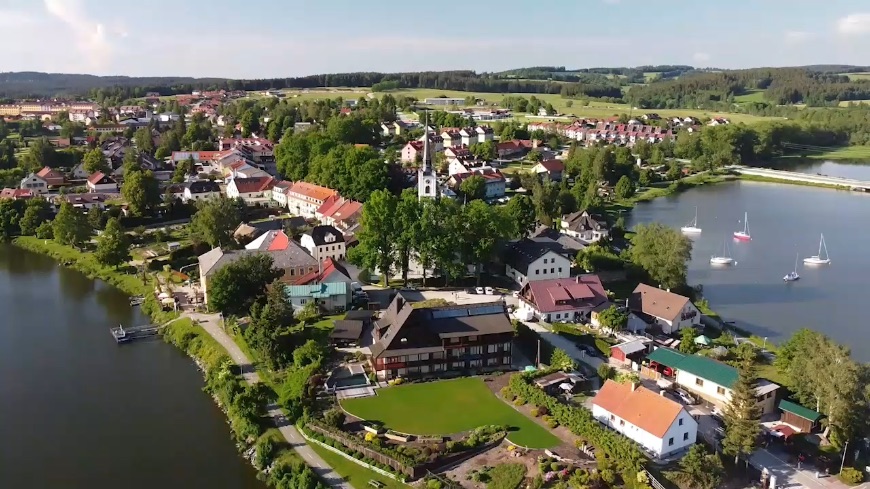
Frymburk – stories from a peninsula
An old market square, a distinctive church and memories of Adalbert Stifter: get to know Frymburk from the water.
Read the story
Frymburk stands on a peninsula in Lake Lipno. St Bartholomew’s Church is a distinctive landmark on the shore. Behind it lies the historic centre with its long market square, a reminder of Frymburk’s importance as a trading place.
Trade routes crossed this region long before the reservoir existed. They linked Bohemia with Austrian territories, and salt was among the important goods carried along them. Wars and fires repeatedly changed the settlement. The great fire of 1856 left a particularly deep mark.
Adalbert Stifter also had ties to Frymburk. His visits and the memory of Fanny Greipl are part of its local history, and a monument commemorates the writer. After leaving the ship, you can combine a walk from the lake with a visit to the square. The local ferry to the southern shore is a separate transport service from LIPNO LINE cruises.
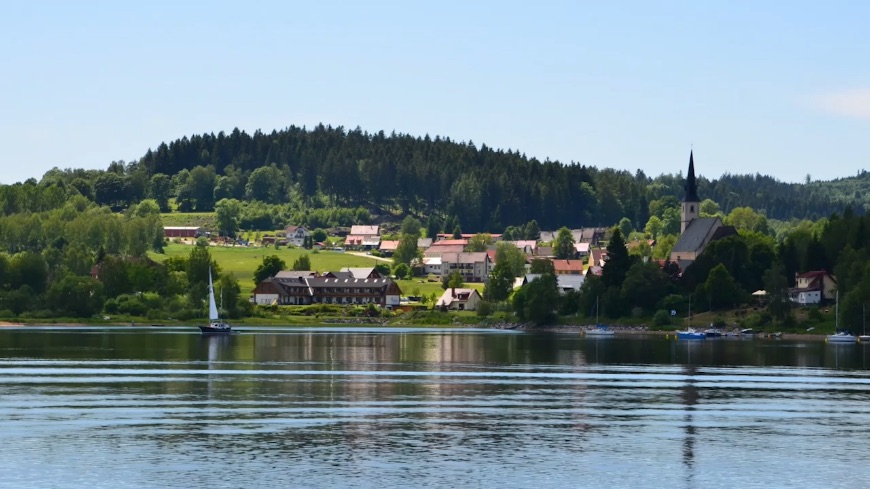
Přední Výtoň – beneath the Bohemian Forest
Look from the southern shore towards wooded hills and the ruins of Vítkův hrádek. Here, landscape and border history are closely connected.
Read the story
Přední Výtoň lies on the southern shore of Lake Lipno, close to the Austrian border. The Church of St Philip and St James is a local landmark. Behind it, the wooded slopes of the Bohemian Forest rise above the village and give the landscape its peaceful character.
High above the lake stand the ruins of Vítkův hrádek, known in German as Wittinghausen. The castle is one of the region’s places to visit and is also connected with the literary world of Adalbert Stifter. Plan it as a separate excursion: the ruins are not immediately beside the port.
The nearby border shaped life here for many decades. During the Cold War, access to parts of this landscape was restricted. Today, visitors can explore it again along its paths and from the water. The port at Přední Výtoň and the ferry landing in neighbouring Frydava are different places. Frydava was also where the Adalbert Stifter and Smetana arrived at Lipno after their journeys overland.
Horní Planá – Adalbert Stifter’s hometown
Discover the writer’s birthplace and the landscape that shaped him, with ideas for exploring the area around Horní Planá.
Read the story
Horní Planá, formerly known as Oberplan, is the birthplace of Adalbert Stifter. The writer was born here in 1805. The landscape of the Bohemian Forest stayed with him throughout his life and returns in his stories. His childhood home keeps his memory alive.
The town has a long history as a centre for the surrounding area. Trade, followed later by the railway, connected it with places further afield. War, displacement and the changes of the 20th century also left their mark here. The Lipno reservoir eventually gave the town a new setting beside the water.
Around Horní Planá, you can extend the views from your cruise with an outing on land. Dobrá Voda lookout tower offers a panorama of the lake and wooded hills. Another destination is Lake Olšina with its nature trail. Both feature in our trip ideas; allow time for a separate excursion beyond the cruise itself.
Ships and stories
How our ships reached Lake Lipno
From the first cruises to an extraordinary journey by road, historical footage tells the story of lake shipping and the arrival of the Adalbert Stifter.
Read the story
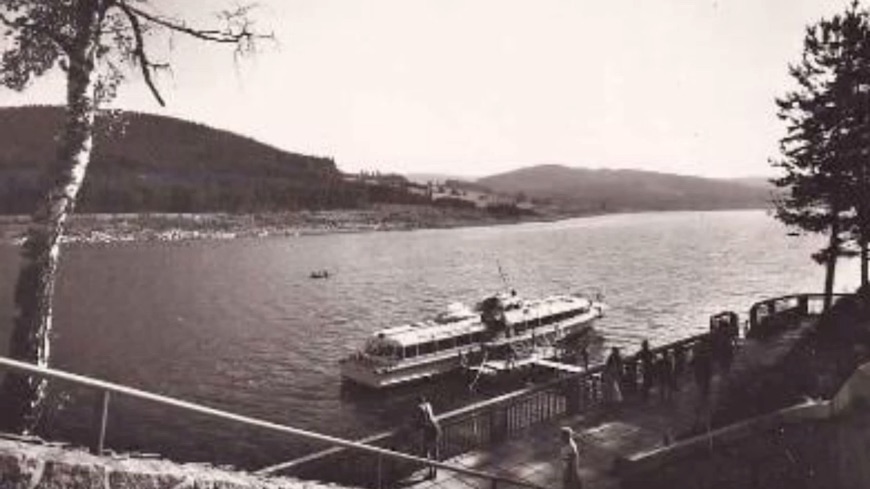
The Lipno reservoir changed travel across the region. Regular passenger shipping began on 1 May 1959 with the Vltava and Lipno. In the early years, a ticket cost just one Czechoslovak koruna, written as 1 Kčs. The Vltava remains part of the fleet today.
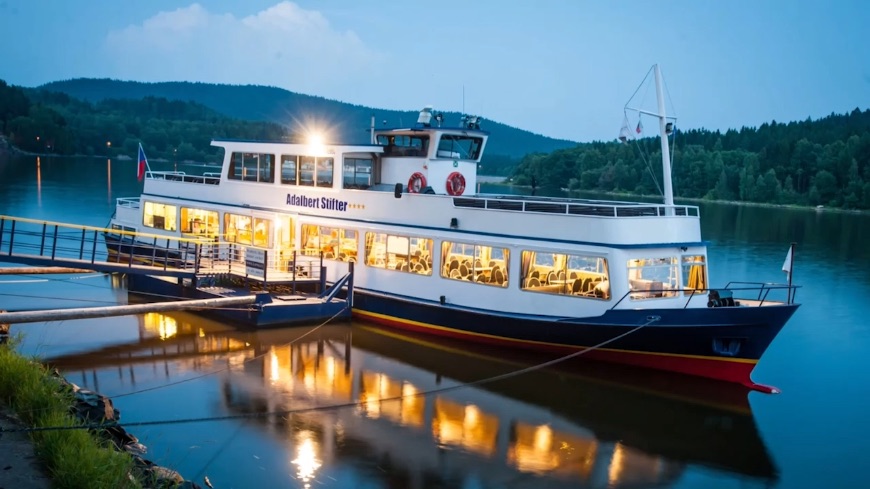
The Dorn-Fussenegger family took over the shipping business in 2001. The Adalbert Stifter joined the fleet in 2012, followed by the Smetana in 2020. Each ship brings its own story. Before moving to Lipno, the Adalbert Stifter sailed on the Rhine under the name Marksburg.
Her journey followed the Rhine, Main and Danube to Linz. From there, a heavy transport carried her through the Mühlviertel region towards Lipno. Moving a ship 32.50 metres long and six metres wide along roads required careful preparation and many helping hands. At Frydava, the Adalbert Stifter finally reached her new home waters.
The film combines this journey with historical footage of the business. Some details reflect the circumstances at the time. Our company history and current ship pages explain how the fleet has developed since then.
Adalbert Stifter – the person behind the ship’s name
The writer had a close bond with the Bohemian Forest. His relationship with the landscape explains why one of our ships bears his name.
Read the story
Adalbert Stifter was born in 1805 in Oberplan, now Horní Planá. His education took him to Kremsmünster and later to Vienna. He worked as a teacher and school inspector, but became best known as a writer. Painting was another important part of his life.
The landscape of his home region has a prominent place in his work. Forests, mountains and lakes are more than a backdrop: they shape the atmosphere of his stories and his view of people. Works such as “Der Hochwald” connect literature with the Bohemian Forest. A cruise on today’s Lake Lipno offers a fresh perspective on that world.
Stifter died in 1868. His birthplace in Horní Planá and the monument above Plešné Lake commemorate him. The name of our ship Adalbert Stifter continues this connection between landscape, culture and people on both sides of the border. In this way, the writer’s memory also accompanies a journey across the lake.